Touch, Tarnish & Temporal Palimpsest
Mary Dilanchhian
Woodbury University - School of Architecture
Professor: Heather Scott Peterson
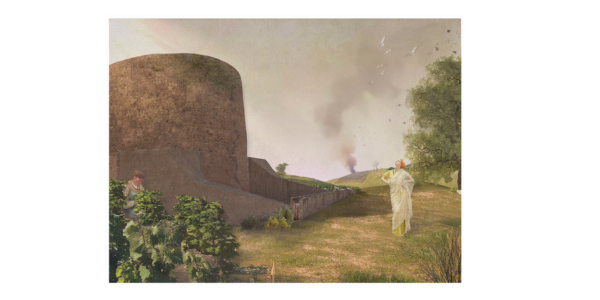
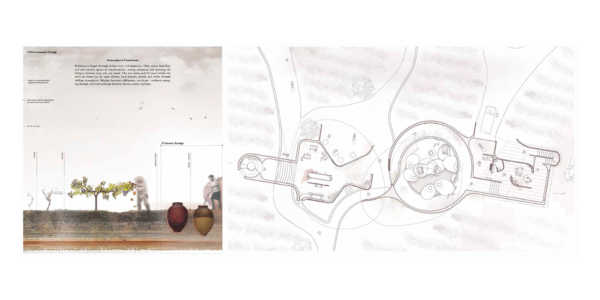
Resilience is reciprocal-an architecture where metals, microbes, and climate calibrate performance, where soil, fungi, and shifting microbiomes, intensified by a warming world, become parameters rather than afterthoughts. Resilience is material intelligence. Architecture is not fixed-it is a dynamic exchange with climate, soil, microbes, materials, and people. Against the static ideals of preservation that seek to arrest time, it claims change as its medium. Patina, stain, and \Vear are not decay but testimony-traces of life, of interaction, of event. Set within a vineyard, the project treats post-climate event soils, dust, and humidity as design inputs.
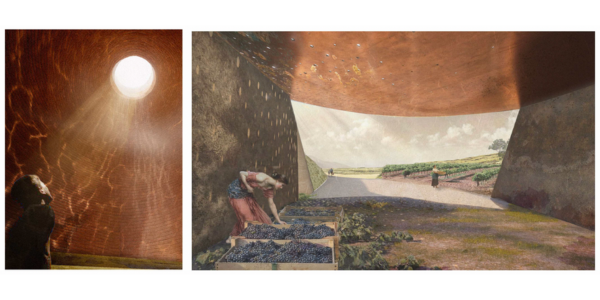
Warming, drought-deluge swings, and dust are reorganizing Calit,Jrnia’s soil 1nicrobion1es, expanding fungal seasons. This living volatility becomes a framework in which soils are tested, mapped, and huffered; swales intercept first-flush contaminants; humidity is managed; and earth-coupled mass stabilizes heat and reduces ember risk. Copper, bronze, and brass assemblies choreograph patination, anticipating microbially influenced corrosion so that oxidation, polishing, and runoff register as calibrated performance over time. Beyond fire resilience, the architecture engages climate-amplified microbial dynamics. Through its buried mass and noncombustible roof, which deflects embers, channels runoff, and mediates surface, the building ages both legibly and productively. Resilience emerges as an ongoing negotiation between materials, microbes, and climate.