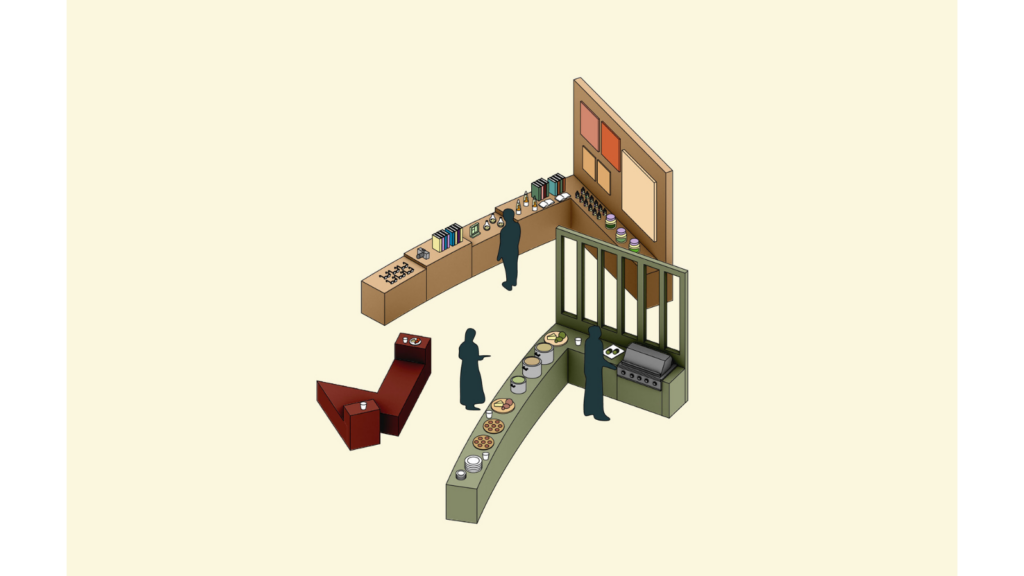
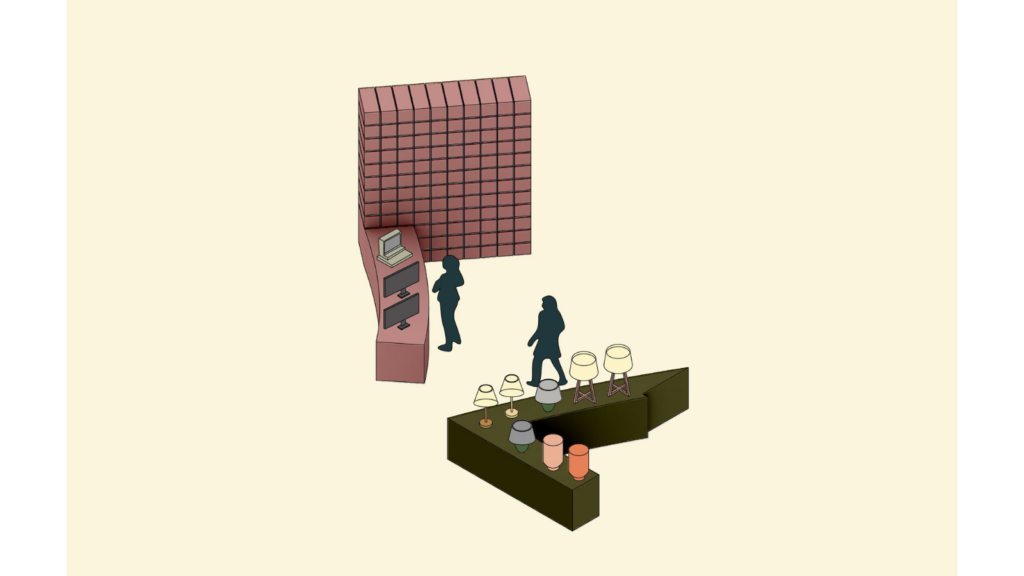
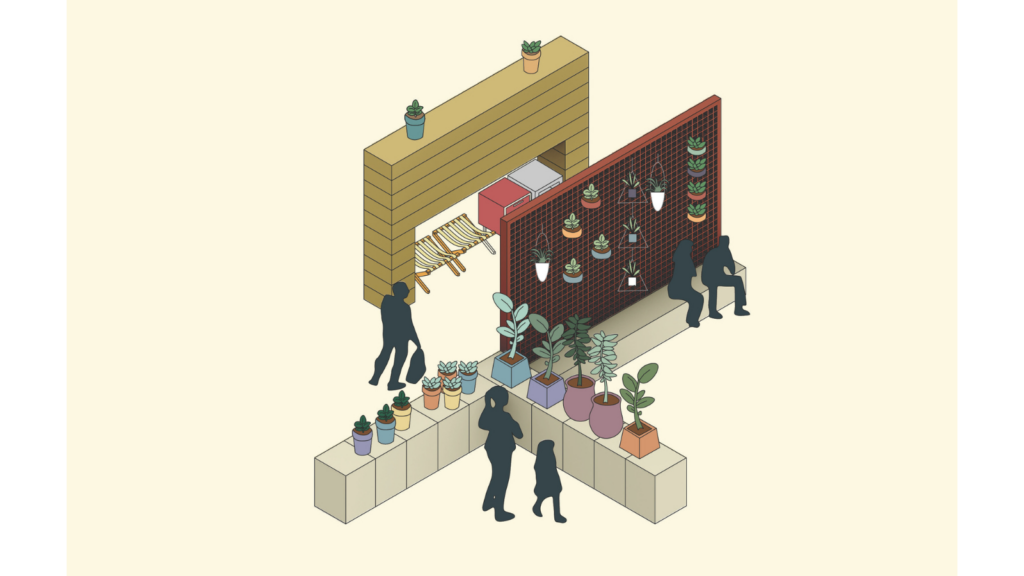
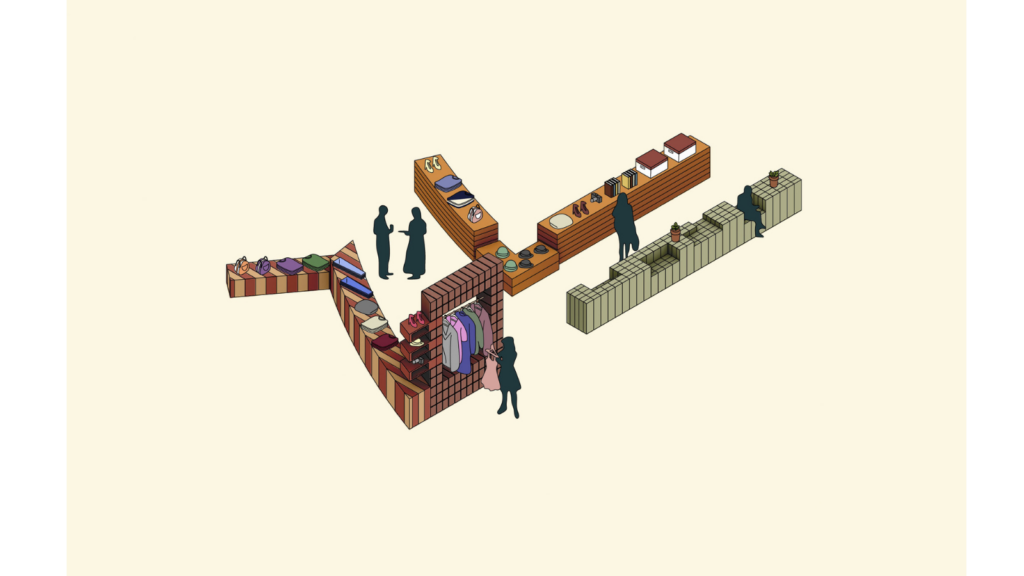
Kizuna, meaning “bond,” represents my vision to unite the community at Alexandria House, which offers safe housing for women and children facing homelessness. My design for the alley spaces creates versatile areas to showcase donations while fostering a welcoming shopping environment. Inspired by Japanese calligraphy, the furniture blends structured lines with fluid curves for adaptability. The graphic elements use grid systems to create engaging textures and vibrant color fields. Through thoughtful placement and a bright color palette, I aim to attract community members and cultivate a space of hope and connection.
Heather Flood
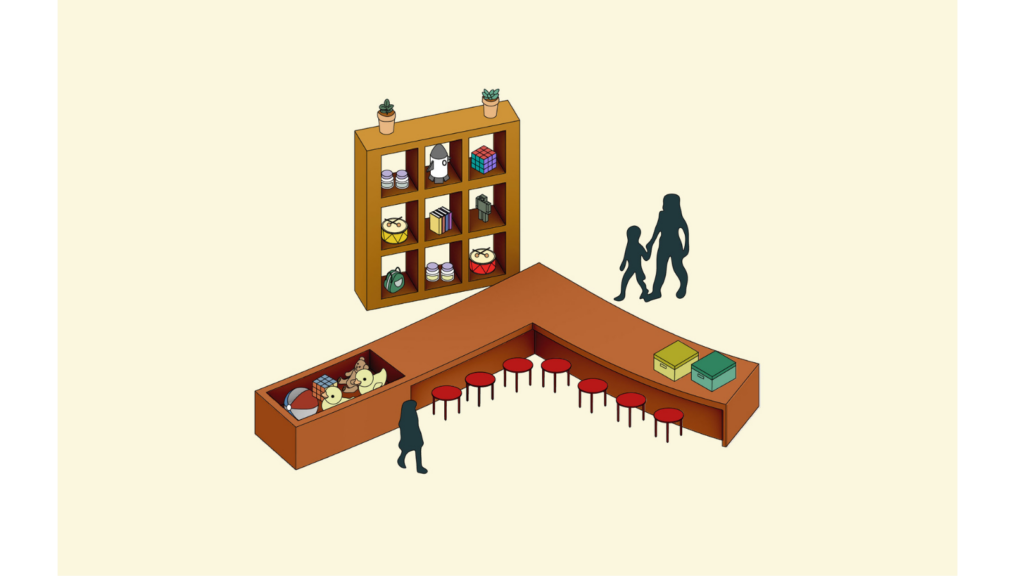
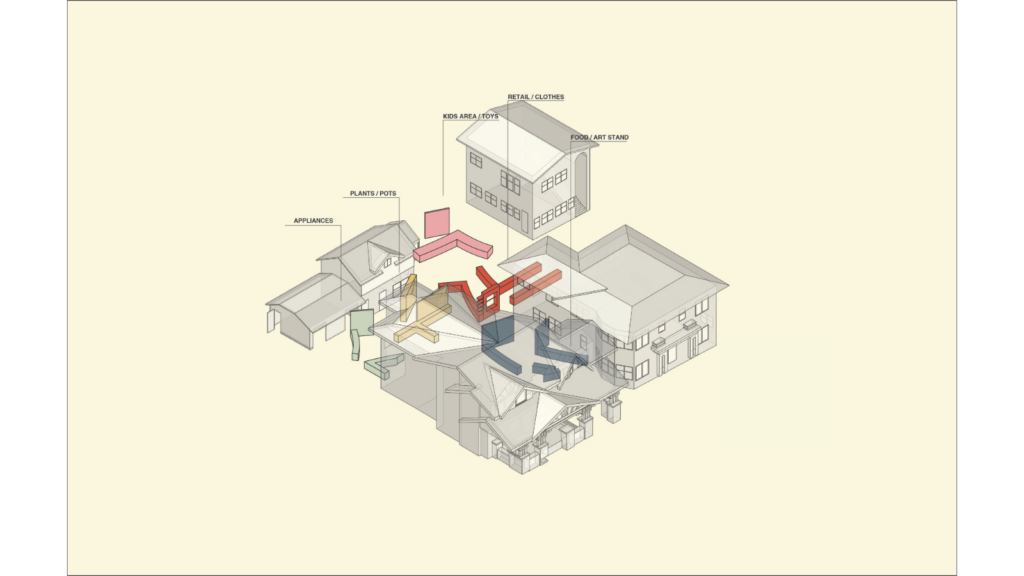
The Japanese word Kizuna, meaning “bond” or “connection,” is the essence of my project: to unite the community at Alexandria House. Alexandria House is a place of hospitality, healing, and hope, providing safe and supportive housing for women and children in Los Angeles who have faced homelessness, trauma, or instability. This organization receives a steady stream of donations from the community—everything from clothing and appliances to household goods. These items, though valuable, require an effective system for display and organization. My design for the alleys between the houses aims to address this need by creating versatile, functional spaces where these donations can be beautifully showcased. Moreover, my goal is to create an environment where community members feel welcome to shop, connect, and learn more about the organization’s critical mission.
The idea behind Kizuna goes beyond practical functionality. It seeks to create a deeper connection between the organization and the community it serves. The alley spaces, often overlooked or underutilized, are reimagined as active, engaging areas where the residents of Alexandria House can feel empowered to interact with the broader community. These spaces also allow community members to participate more directly, whether by donating, purchasing, or simply spending time in a thoughtfully designed environment that reflects the values of connection and care.
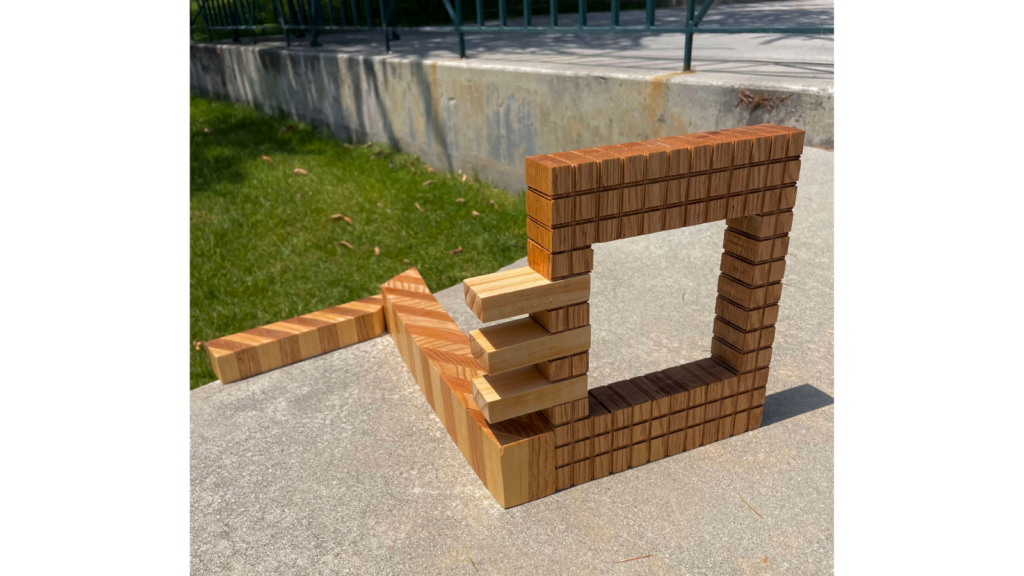
In addition to the furniture design, the graphic elements throughout the space further enhance the aesthetic appeal. I’ve used a variety of grid systems to create hatch-like textures, which serve multiple purposes. These hatches not only add depth and interest to the surfaces but also provide a practical element by creating surfaces where small objects can be displayed. The graphic designs I’ve made, demonstrate my inspiration for using different grid systems. Different hatches and grids allow for texture but also can be tight enough to create fields of color. This use of texture creates visual cohesion across the project while maintaining flexibility in its functionality.
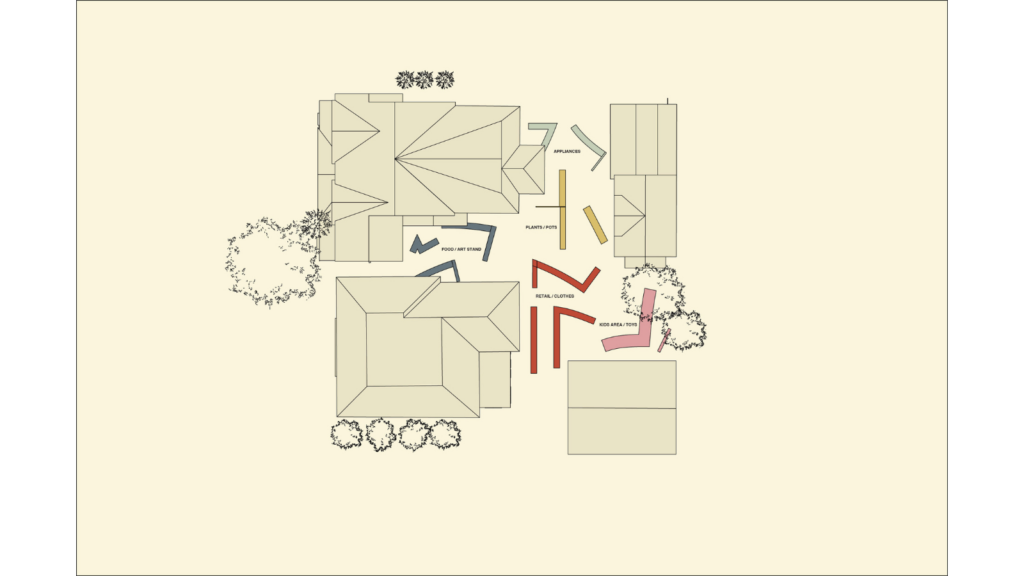
The color palette I’ve chosen plays a key role in attracting the community to these spaces. Bright, natural hues bring a sense of warmth and vitality to the alleys, creating an inviting atmosphere. Each section of the alleyway has been carefully curated to draw people in. Food and art stands are positioned near the entrance, where they can immediately engage visitors, while retail stands, offering clothing and household goods, are arranged in the middle. Finally, the children’s area is placed near the existing daycare facility at Alexandria House, providing a safe and engaging space for families with young children to enjoy.
At the heart of Kizuna is the idea of versatility, both in design and purpose. This project is not just about organizing donations; it’s about creating an inclusive, welcoming environment where the community can come together. Through thoughtful design, my goal is to strengthen the bond between Alexandria House and the people it serves, offering a space where hope, connection, and community can flourish.